
Partnerships that link smallholder farmers to buyers for shared growth and value creation
An Alliance is made up of organized small producers (agricultural and other sectors) and buyers (processors, intermediaries, consumers, government, etc.), and may receive assistance from other individuals and/or institutional players.
A Productive Alliance is an economic agreement between a group of small rural producers (and other economic actors if applicable) and a commercial off-taker/buyer, in which all assume risks, provide resources and share the profits, such that the agreement can continue over the medium and long term period.
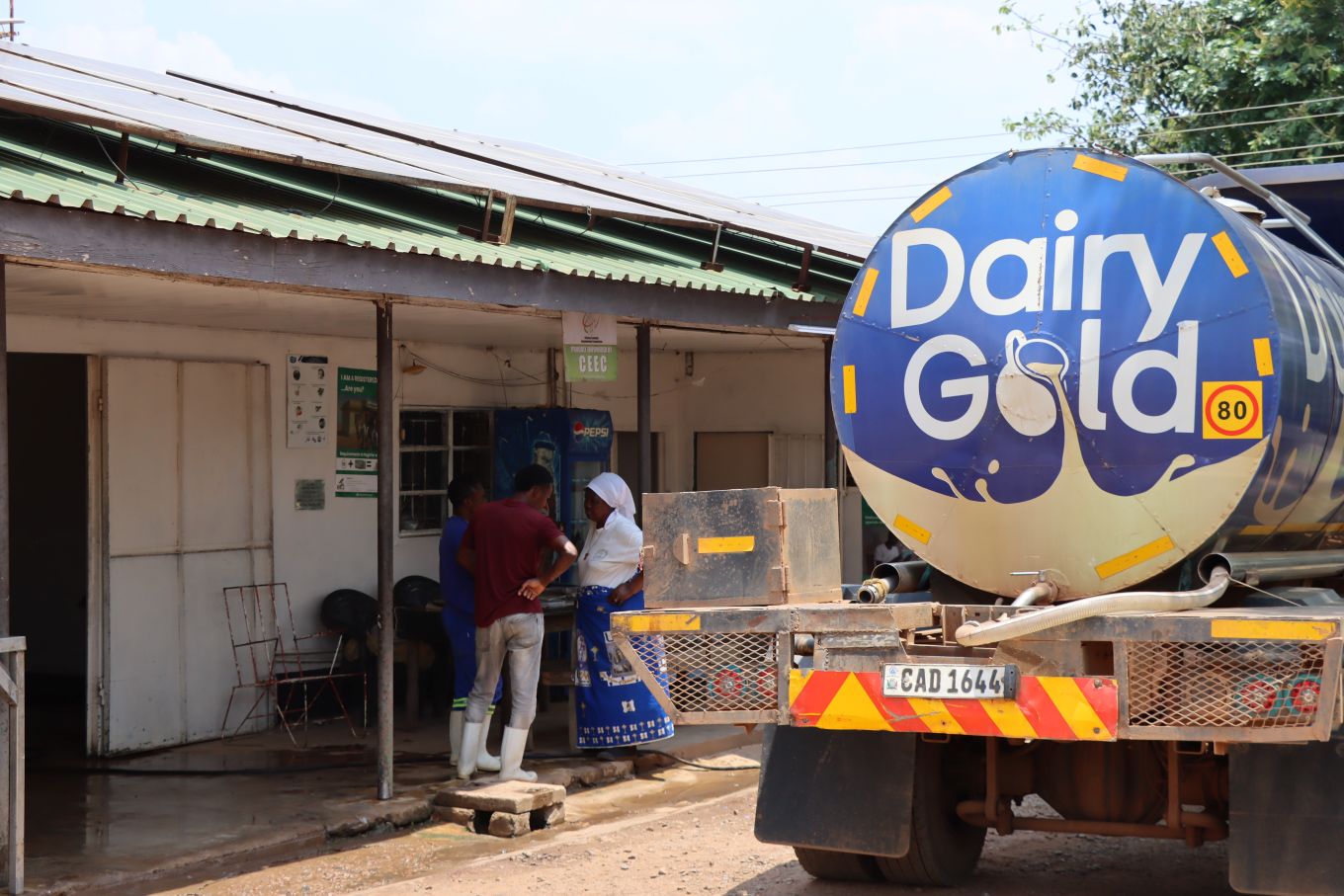
The objective of this subcomponent is to support transition of small and marginal farmers to market-centric approaches by improving their capacity to finance and execute productivity enhancing investments. This will be achieved through Matching Grant (MG) financing to POs who cannot otherwise access commercial credit for productive investments.
The Project will support productive investments at the PO level to enable primary and secondary value addition and adoption of climate-resilient production technologies for stronger market participation. These investments will be identified and cleared for support through the Project on a case-by-case basis.
The Project will use the instrument of “productive alliance” in linking the organised small–scale producers to large markets. The Alliance will receive support from Technical Service Providers (TSP) both during its initial phase and during the execution phase.
Producer Organizations under PAZ will receive technical assistance to improve production and management of their organizations, grant funding to invest in technical and infrastructure enhancements, and support to access commercial loan finance. Off-takers will benefit from improved and consistent volumes and quality of supplies received. The productive alliances will improve economic benefits derived from enhanced productivity, rural accessibility and post-production gains, processing facilities, better organized value chains, and access to new markets.
Any partnership is expected to include at least 10 smallholder farmers, of which at least 90 percent need to meet the project’s definition of a small and marginal farmer (more eligibility criteria is contained in Chapter 6 of the Project Implementation Manual).
The grant financing is strictly for purchase of productive assets or investment expenditures, TA, climate adaptation and mitigation measures, certifications, as defined in the MG Manual and PIM.
The Productive Alliance Model comprises three key agents;
(i) a group of small-scale producers;
(ii) one or more buyers/off takers; and
(iii) the public sector
The producers will be typically united in a Producer Organization (PO) and the buyer(s) can be active at different levels of a value chain in either commercial or institutional markets. The public sector is represented by the Ministry of Commerce, Trade and Industry and works in collaboration with the ministries responsible for agriculture and small and medium business enterprise development, which include Ministry of Agriculture, Ministry of Fisheries and Livestock and Ministry of Small and Medium Enterprise Development, among others.
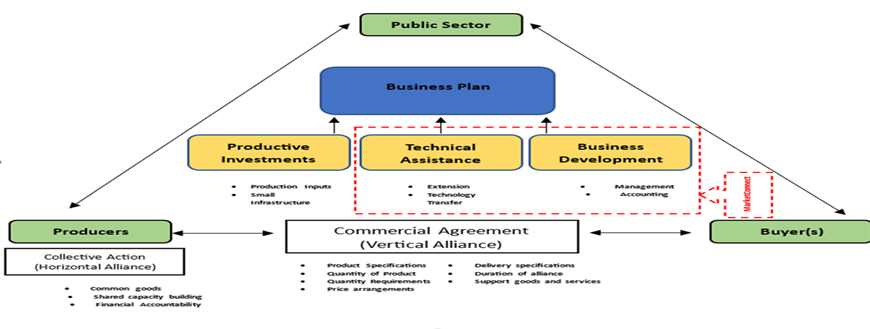
As Productive Alliances are being put into practice, they will be further governed by the following operating principles:
This subcomponent will operationalize at least 1,400 PAZ partnerships across the ten provinces by December 2028, targeting approximately 63,000 producers as direct beneficiaries through MGs of which fifty (50) percent should women.
3rd Floor, Kwacha Pension House Lusaka, Zambia
+260 211 220422
+260 961 516 904

© 2026 Zambia Agribusiness and Trade Project II.